


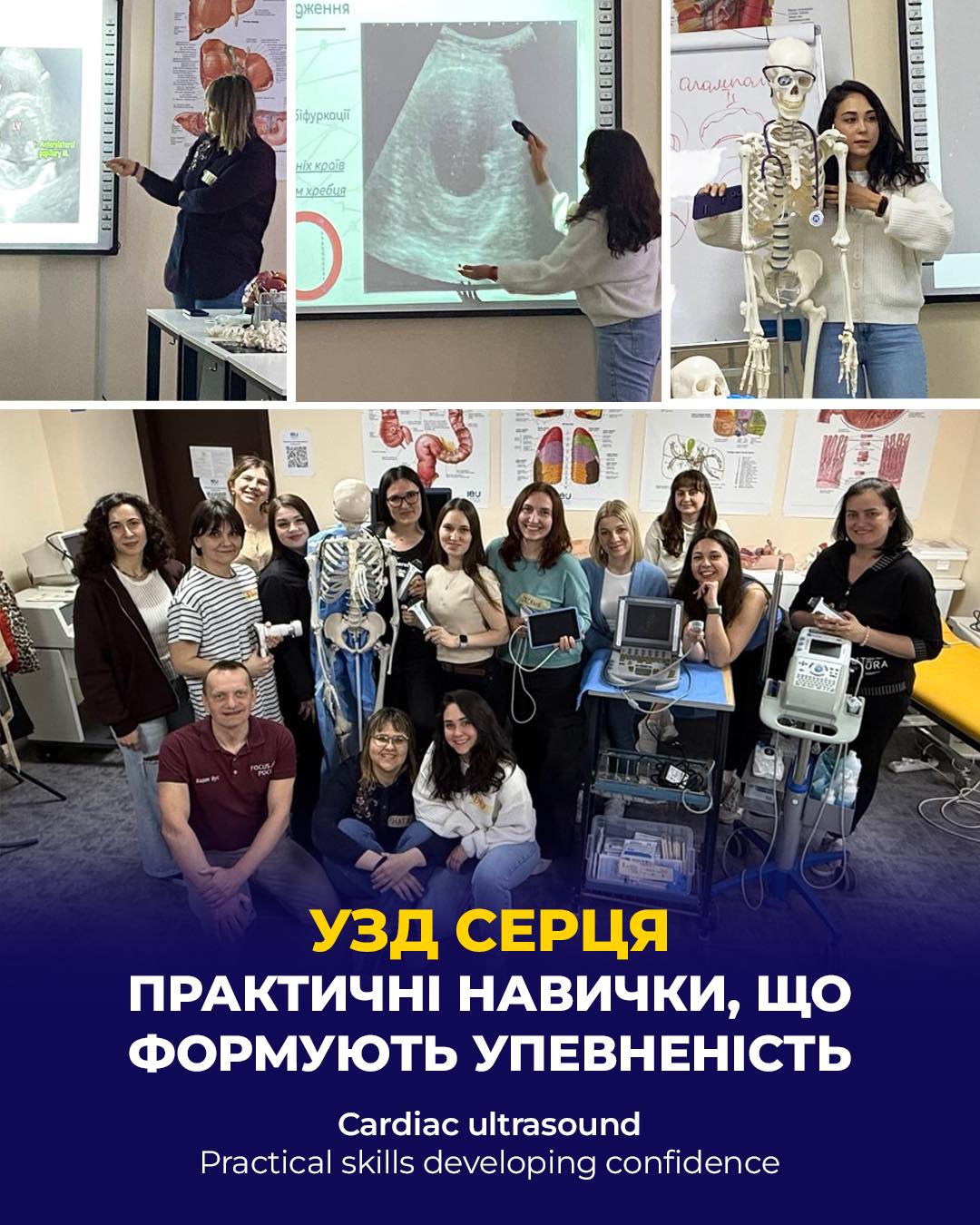
A class in cardiac ultrasound diagnostics in the POCUS (Point-of-Care Ultrasound) format took place as part of the integrated course. Second- and third-year students not only consolidated their theoretical knowledge but also practiced using an ultrasound scanner to study the anatomy and physiology of the heart in real time. It was a part of our weekly work on advanced learning of the material, which began in September.
Attendees practiced the following:
• Removal of heart valves and assessment of their function;
• Examination of the thyroid gland, fixing the probe as an anchor on the patient’s arm;
• Assessment of the gallbladder, even after eating (all having a wall thickness of up to 3 mm!);
• Measurement of the optic nerve diameter with the eye closed;
• Observing the pupil’s reaction to light is an important neurological landmark.
Despite the complexity and specifics, students showed great interest, with some skills already becoming automated for them. This proves the efficiency of our problem-based learning according to the Harvard double helix approach.
Contact us:


 Address
  Phone
Phone 
 Email
Email